This Femininity is Mine

Disability and femininity. Reclaiming femininity as a disabled woman.

4/8/26

I want to see disabled girls being snobs. I want to see disabled girls being the girliest girls. 

I want them wearing enough layers of expensive foundation on their face to build a house spanning from their foreheads down to their cheek-bones. I want to see their skin. To have their scars peek through crop tops or over their jeans. I want them to waddle, roll, or “crip walk” down the street with the most frivolous and hard to pronounce drinks. 

I want a whole cast of beautiful disabled girls in expensive outfits shouting at each other inside of restaurants in a reality tv series. I want their dating lives and relationship drama to be front and center on my television screen. 

I want them on runways, in ads for beauty products, and in my magazines. 

I want them on the small and big screen. I want to hear them sing. 

I want them to be overconfident when duty calls. I want them to be unapologetic in who they are, what they believe, what and who they stand for, what they think and say. 

That is all. That is the post.

The Test Won

The author reflects on a prior experience at a selective enrollment high school that received undeserved funding while questioning the allocation of resources within the education system. They highlight the disparity between schools and stress that funding should prioritize those in greater need, particularly amid the pressures of standardized testing and micromanagement.

4/6/26

Camila Isopo

I attended a selective enrollment high school over a decade ago. I was an upperclassman when we were visited by the then mayor to announce us receiving $1 million. I remember many of us being annoyed that his visit would interrupt our regularly scheduled programming. Access to the library was blocked off for those of us still needing to print our assignments because his speech was televised in there. And they were able to visit, with their cameras, the class that they chose, in the middle of instruction. And of course, it was my French class. I remember thinking that I was happy I chose to wash my hair the day before. 

Most importantly, I remember all of us in my classes asking why we had to have this visit, why we had our schedules interrupted and access to key areas restricted, and why we were to receive this huge amount of money over the many other schools in the city. We knew we were doing just fine without it. There were schools in the city that needed it more. Students who were as smart and as gifted and as important as us, and they needed this money more. But they weren’t ever going to receive this large gift. And so we questioned it. 

We were predominantly white. I wouldn’t say affluent but we were less poor than others. And we got this money we didn’t think we needed more than others. 

Twelve years later, I’ve gone through this situation that has confirmed to me this one truth: the test won and I hate it. I was a brand new teacher at a school I loved that I thought I could fit into while being myself. And before that first year was up, I was fired. 


The year before me, the students took their IAR tests and scored poorly. They lost rank and their target group was the students with disabilities. This happened for several simple truths. Number one: students with disabilities test poorly for a variety of reasons and that’s why they have their programs. Number two: this is a small school.

Number two is really important. The population of students with disabilities in an average school will only ever be a certain percentage of the total population of students at said school. Since the school is small and the students with IEPs tested poorly, it looks as if the school is doing poorly. At least test-wise. 

What’s the problem with that?

Leadership is micromanaged. Teachers are brought in more “support.” People also get fired over things like this. Over time, rankings can get worse and more “support” is given to leadership and teachers.  But, for schools with poor ranking, they can lose much needed funding.

This is what we don’t get. And we never did…Us smart kids, we never understood why the kids who were doing just fine…got more funds than kids who really needed it, as shown by their poor performance. And ironically, what decides they don’t get funding? The poor test scores. The lack of academic growth, as per state tests. 

Give the money to the kids who need it. Wiith the system that exists now, teachers who love their kids and are loved back by them, who really are performing everyday magic in their classrooms, get punished for it. Just like I did, because my growth “wasn’t consistent,” and this “wasn’t sustainable” and the students have significant needs, and they need to test better because they’ll lose funding as a school in the future should the test scores not be higher.

I Should Have Made Your T-Chart For You, Kids

The author reflects on their dismissal from a teaching position, expressing frustration over their teaching methods being deemed ineffective despite efforts to support students with disabilities. They criticize the school’s focus on standardized test scores for funding instead of valuing personalized instruction, feeling their removal undermines student stability and growth.

March 23, 2026

You have a heart for kids. There’s a place for you in education. You’re so positive.

That’s what they said to me during my firing. And also that they knew I tried my best, that I was trying to learn and improve, blah blah blah. I did not get renewal and I was also dismissed the same day. They said they knew I wasn’t harming them. But the way they let me go sure made me feel like I had been. 

My instruction is ineffective because I make the kids start their assignments from scratch even though they have learning disabilities and attention or hyperactivity issues. Even though I provide them with nonfiction summary graphic organizers for the organization of their ideas. Even though I provide them with slides upon slides of notes that they need. So all they have to do is copy them down. And I’ll highlight the most important texts for those that take too long to handwrite or decide which details are key. Even though they do “notice and wonders” and use sentence builders. Even though I provide videos and replay them. Even though they get to draw their ideas and work together to make visual models. Even though I send home copies of notes upon request. Even though they get opportunities to, and do, discuss with each other the content we’re learning together. Were learning together. Not anymore. But admin comes in a few times a year, almost sporadically, and then decides they haven’t seen enough. Even though they actually were learning and growing.

The problem now with them is that the students in the special education classroom are not testing high enough on the state tests. The kids don’t test high enough on those tests, then the school doesn’t get funding. The school lost ranking from years prior, from instructors and children prior to my arrival. But I’m brand new to the field. So, I have to go. Even though I don’t even teach the children the subjects in which they test poorly. 

Firing me two months before the school year ends is what’s best for the disabled kids. Not letting me say goodbye is best for them. Removing their adult representation of who they are and what they struggle with, what they can achieve, is what’s best for the kids. Removing stability is what’s best for the kids. Having them grieve at a random point of the year is what’s best for the kids. All because I didn’t print them a ready-made T-chart so they could put their notices and wonders in. All because I gave them more content. 

I should have cut their workload in half. That was going to be how they scored higher on their state exams so we could keep our funding. But I didn’t do that. I made them make their “T’s” from scratch. My bad, kids.

On Grieving While They’re Still There

The author reflects on the complex nature of grief, expressing sorrow for both tangible and intangible losses related to a failed marriage, changing identity, and professional dreams. They explore the concept of grieving while still living, likening their experience to sticky grief, which cannot be easily wiped away, yet acknowledge the persistence of hope and joy.

March 22, 2026

They’re. They are. There they are. Alive and well.

And here I am…grieving them. Him. It. All of it. 

I’ve become a bit of an expert on grieving someone still alive. On grieving the inanimate AND what’s been kept on life support and who has been kept on actual life support. All those things and people that are about to go. Whether you know it or not. Whether you want it or not. Whether you caused it or not (or took a big chunk of the blame for it). 

My sticky grief. I hate grape jelly. If I were to have grape jelly on my hand, I would wipe it off with a napkin or a wipe. I can’t grab a napkin or a wipe to clean up the sticky grief inside of me. Instead, I’m writing on it. It’s the next best thing. 

What am I grieving? All of it, really. 

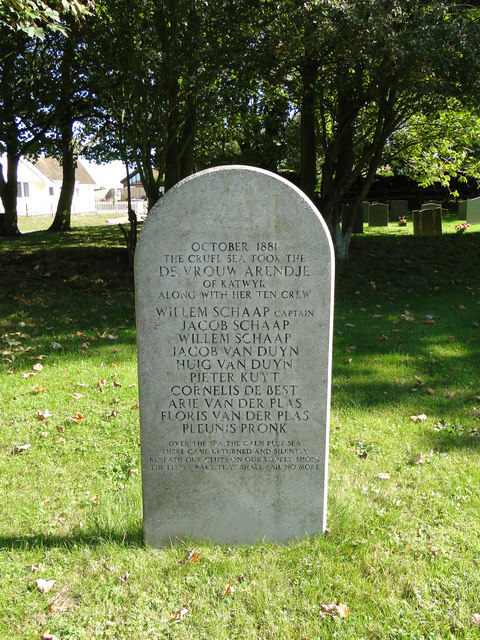
What is all of it? Well, if I could put things on the gravestone in the image for this article, the bottom text would be it…

The marriage that I put to rest because it emptied before the love ran out. The future I thought he and I would have. The life I worked so hard to build and protect so we could have that future together. The body I used to have, which won’t stop changing as time ticks by. The apartment we shared for four years, where our three fur babies were being raised. The local Starbucks and Dunkin in that neighborhood. The park our two dogs loved. The clinically bright bedroom we shared with the extremely small closet and nonfunctioning outlets. 

My fairly young brainchild: to walk across that stage for my master’s degree in special education. The classrooms I’ve left behind. The children sat in them. Teaching them, laughing with them, crying with them, the nonstop overstimulation, answering nonsense questions and the important ones too. 

My financial independence (for now) and increased social mobility (again for now). 

I feel like I’m a female, modern-day Job, if you know your Abrahamic texts. And all I can do is submit and praise. My only options left. And just keep living, of course. At least I still have my health, my family, my wits, and my ability to find and live within the joy. (I know I have a lot left.)

Why does everything have to hurt so bad, though? Why is it so sticky? Why does it not matter if you saw it coming or not? If you were waiting or not? If you knew it needed to happen or not?

It hurts just the same. Why?

Hello World!

Hello world (and/or dark void I like to shout into, at times)! Here lie the ideas that wouldn’t die. This blog is my return to more consistent, meaningful, personal, creative writing. I’ve been away for far too long but I’m back, baby. Here, you will get glimpses into my experiences as a young, educated disabled Latina advocate/writer/educator/resident crazy person, exploring the world and living through the end of her “roaring 20’s.” You can expect stories of arte, cultura, vida, and everything else, as I navigate what it means to build and lead “an enviable life,” for myself and for others, a journey inspired by Ann Turnbull, her family, and their mission.

Chicago Lakeshore” by Nick Le/ CC0 1.0

On Being an Educator, Post-COVID

The educator expresses the complexities of teaching adolescents, especially post-COVID, feeling both love and frustration towards her students. As a disabled Latina educator, she questions her place within a flawed system and grapples with the decision to leave her role, fearing her absence may deprive her students of needed representation and support.

How would I describe being an educator for adolescents and preteens? Near impossible, soul-sucking, liberating, and sickeningly sweet. Especially with it being post-covid and I love my nonbiological kids (the scholars) so much. I would die for any student in my class, literally.  But it’s so hard to teach. It’s one of the hardest things I’ve ever done. Teachers are nurturers. And as nurturers, they are overworked and underrewarded. 

You get so invested trying to ensure your littles become kind, happy, well-rounded adults. It’s so hard to not feel like mistakes are personal failures. Like you’re a failure. You can, at times, take things personally. 

But at the same time, I have questions about the whole system. And if I were to ask them aloud, I wonder if people would accuse me of skirting personal responsibility? 

Can I, a disabled woman, really succeed in a field that was built for white able-bodied Americans? I mean, the system was built with the idea it can maintain white supremacy. And I’m a disabled Latina immigrant educator. Not that I’m saying me being Latina gets in the way of anything, though. 

Anyway, as the summer approaches and my third year in education comes to an end, it’s looking highly likely that I’ll be stepping away. It’s a bittersweet, terrifying, and exciting departure from what I had previously envisioned for myself. I feel bad for the kids though. Did I mention my students are also disabled? I feel like by having to step away, I’m failing them. I’m them from the future. Representation matters. If I can’t do it, can they? And of course I know they can, but they need someone around who knows that and stands in that truth. What does that mean if I can’t represent them anymore?